For many engineers, an engineering career journey begins with curiosity. For Andy, our EC&I and Software Engineering Manager, that curiosity started almost as soon as he could walk.
Learning from the ground up
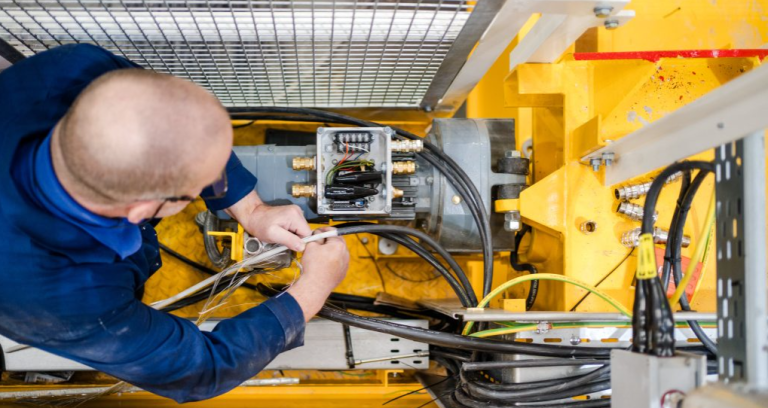
Engineering was never far away from Andy’s everyday life. His father was a director and part owner of an engineering company, which meant weekends sometimes included visits to the workshop. On the shop floor, electricians would explain what they were working on and often involve Andy in the process, letting him help wire equipment while teaching him the principles behind it.
“When my dad worked away, I’d sometimes get the rare treat of going with him to see the projects he was involved in,” Andy says.
Outside of work, there were always projects underway, whether on the family farm, around the house or on his father’s boat. Andy spent hours assisting with these jobs, gaining practical experience that became his first real introduction to EC&I engineering.
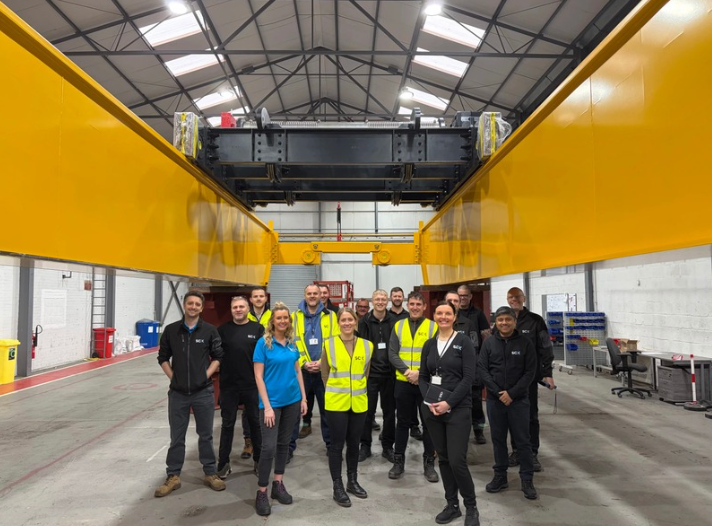
An early start that reflects the passion and dedication our engineers bring to the table.
A career taking shape
By his early teenage years, Andy was already applying his skills in a professional environment.
During school holidays, he worked in a design office as a CAD engineer, producing drawings for systems that would later be built by engineering teams. Using early DOS-based CAD software, from FASTCAD through to early versions of what would eventually evolve into AutoCAD, he learned to produce detailed mechanical and electrical schematics.
“That experience fast-tracked me into the world of controls and automation long before I had any formal job title,” he says.
One moment in particular cemented his career path. At just 16, Andy helped design a cask ZPA conveyor system that was later installed at Tetley’s brewery in Leeds.
“Seeing something I’d contributed to actually running in a real industrial environment was huge. It absolutely confirmed that this was the path I wanted to follow.”

Inspiring the Next Generation of Engineers
Andy believes it’s important to highlight the opportunities engineering offers to young people.
“Engineering is one of the few careers where you can take an idea and turn it into something real,” he says. “It could be a massive structure, a production line or a small control system quietly keeping everything running.”
The profession offers space for many different skills and interests from hands-on practical work to digital design, software development and emerging technologies. Perhaps most importantly, it’s a career built on lifelong learning.
“Technology never stands still and neither do engineers,” Andy says. “If you enjoy understanding how things work, solving problems or creating something new, engineering is a career where you’ll never stop learning and you’ll never be bored”.
How Software Became the Heart of Modern EC&I
Over the course of Andy’s career, the role of software in EC&I systems has transformed dramatically.
“Ten years ago, hardware was the star of the show,” he explains. “Software was there to support it.”
Today, the balance has completely shifted. Modern EC&I systems rely heavily on software to coordinate processes, integrate equipment and ensure systems operate safely and efficiently. Hardware increasingly exists as the platform that enables software to perform these functions.
“Software has effectively become the brain of the system the part that makes everything communicate, behave and work together properly.”
The Future of EC&I Software Engineering
Looking ahead, Andy believes EC&I software engineering will become increasingly automated, connected and intelligent. Design tools are already helping engineers work faster while reducing errors through model-driven development and improved collaboration across disciplines. At the same time, safety-led design and cybersecurity are becoming more critical as systems grow more connected.
Reusable software blocks, standardised architectures and improved remote diagnostics are also transforming how systems are developed and maintained.
“Embedded PLCs are becoming far more powerful,” Andy says. “That means smarter decisions can be made directly at the machine instead of relying on huge central systems.”
Artificial intelligence is also beginning to play a role, helping engineers detect faults earlier, optimise performance and automate repetitive tasks.
“AI won’t replace engineers,” he explains. “But it will become another powerful tool in the engineer’s toolbox.”
Andy’s journey shows how a lifelong curiosity can evolve into a career at the forefront of modern engineering. From early hands-on experience to leading complex EC&I and software projects, his story reflects the blend of practical knowledge, innovation and continuous learning that defines the industry today.
These are the kind of engineers you can rely on at SCX, people who not only understand how systems work, but are driven to improve them. As technology continues to advance, it’s this same curiosity and willingness to adapt that will shape the next generation of engineers, driving smarter, more connected solutions for the future.